


The functionality of the valve
• Control: pressure / flow rate regulation.
• Closure at over-speed flow. (i.e. immediate closure if downstream pipeline is broken by accident).
• Overpressure protection.
• Back flow prevention (check valve).
• On/Off service.
Classification
There are two major methods used to classify valves. These include method of control and valve function. Most valves fall into one or more of the classifications listed below. It is important to understand how the valve operates, as well as how it is best used, to reduce the need for valve maintenance and extra wear on the valve parts.
Ball Valves
Butterfly Valves
Globe Valves
Gate Valves
Diaphragm Valves
- Ball Valves

Ball valves offer very good shut-off capabilities. A simple quarter-turn (90°) completely opens or closes the valve. This characteristic minimizes valve operation time and decreases the likelihood of leakage due to wear from the gland seal.
Butterfly Valves

In butterfly valves, the flow is regulated through a disc-type element held in place in the center of the valve by a rod. Similar to ball valves, valve operation time is short because the valving element is simply rotated a quarter turn (90°) to open or close the passageway.
Globe Valves

The globe valve is suitable for use on a wide variety of applications, from flow rate control to open/close operation.In this type of valve, flow rate control is determined not by the size of the opening in the valve seat, but rather by the lift of the valve plug (the distance the valve plug is from the valve seat).
Gate Valves
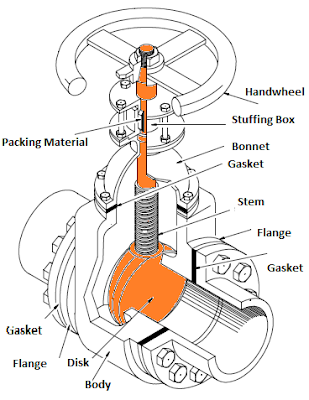
The construction of a gate valve is similar to that of a floodgate: flow is controlled by raising or lowering the valving element, which is generally available in three different types: solid (plain), flexible, and split. The latter two types help prevent the valving element and body from being deformed due to various operating conditions.
Diaphragm Valves

Diaphragm valves use a ‘pinching’ method to stop the valve flow using a flexible diaphragm. They are available in two types: weir and straight-way. The most commonly seen of the two is the weir-type. This is because the straight-way type requires additional stretching of the diaphragm, which can shorten the diaphragm’s life-span.
 Nesbas Facility